Nandlall presents 2022 Revised Edition of Guyana's Laws to Parliament
- Home
- News


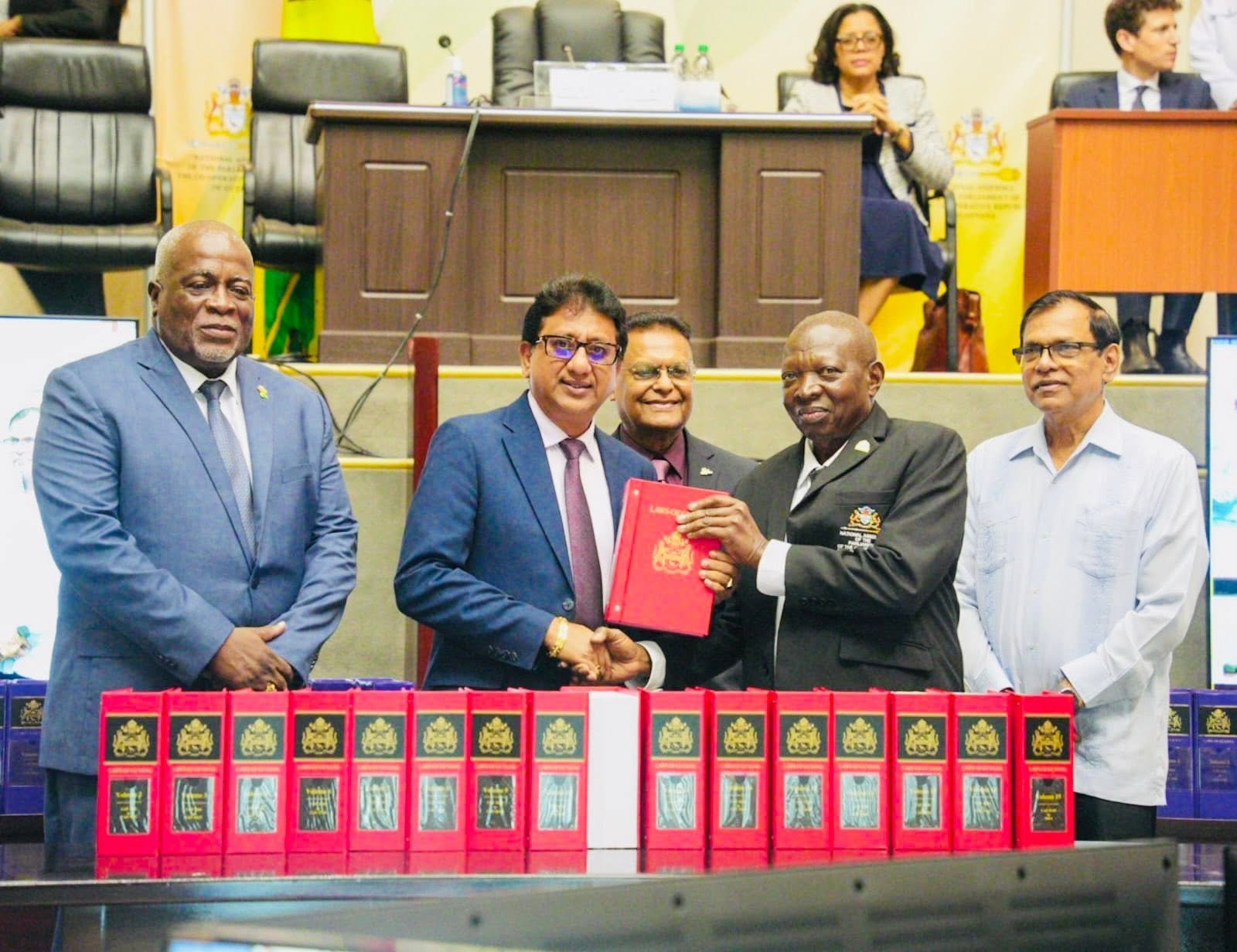
The revised volumes consolidate new laws and amendments passed over the ten-year period, providing lawmakers, legal practitioners, judges, academics and the public with an updated and authoritative reference of Guyana's legal framework.
Speaking in the National Assembly, Nandlall explained that the law revision exercise goes beyond correcting typographical errors and updating language. He said its primary purpose is to incorporate all legislation passed since the previous revision and integrate amendments into existing laws.
"The more fundamental part of the law revision exercise is to insert into those volumes the laws that have been passed since the last revision exercise," the attorney general explained.
He noted that where amendments are made to existing legislation, they are incorporated into the principal Act so that the law can be read in its updated form.
Nandlall said the previous revised edition reflected the laws of Guyana as they stood on December 31, 2012, while the newly completed revision captures all laws enacted up to December 31, 2022.
"So all the laws that we have passed from 2012 up to December 2022, December 31st, are the subject of the revised edition," he told the House.
During his presentation, the attorney general also used the opportunity to explain the lawmaking process to students observing the parliamentary proceedings.
According to Nandlall, legislation begins as a bill that is tabled in the National Assembly and undergoes three readings before being passed.
Following parliamentary approval, the bill is reviewed by the Attorney General's Chambers before being sent to the President for assent.
"It comes here as a bill and it concludes with requisite readings, goes to the President for assent, and when that assent is affixed, it becomes law," he said.
He further explained that bills may be referred to a select committee for detailed examination and amendment before returning to the House for debate and passage.
The attorney general also stressed the importance of preserving previous editions of Guyana's laws for historical and legal research purposes.
"No edition of the laws should be disposed of, but kept for historical purposes," Nandlall stated, noting that judges, lawyers and academics often examine previous versions of legislation to better understand the intent and evolution of the law.
He explained that while Parliament is responsible for making laws, the judiciary plays the critical role of interpreting them, making historical legal records an important tool in the administration of justice.
The revised law books were presented under the authority of the Law Revision Commission, which is chaired by the attorney general.